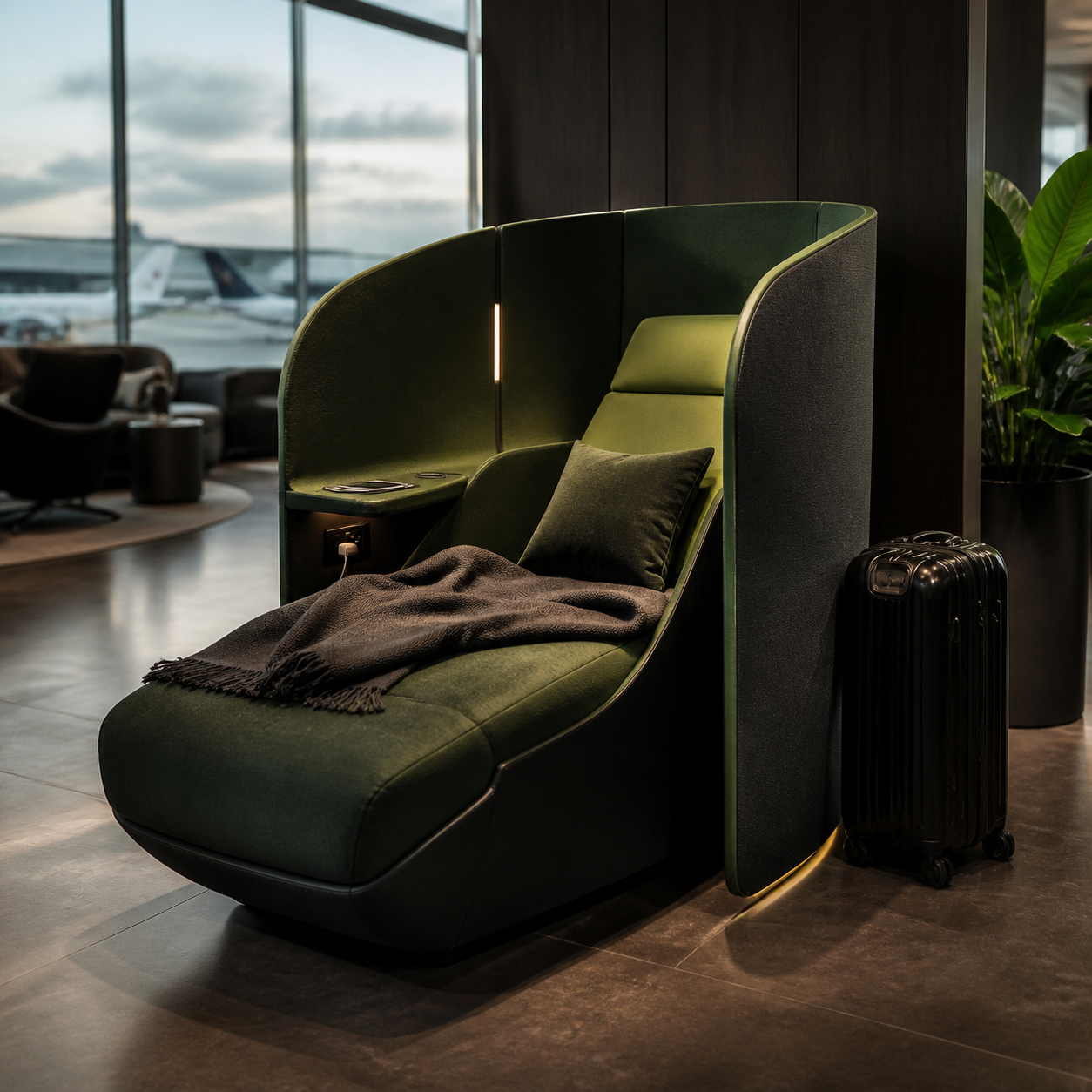
Recliner pod
A lie-flat or deeply reclining chair with a hood or privacy wings. Best for a short nap; usually no lockable door.

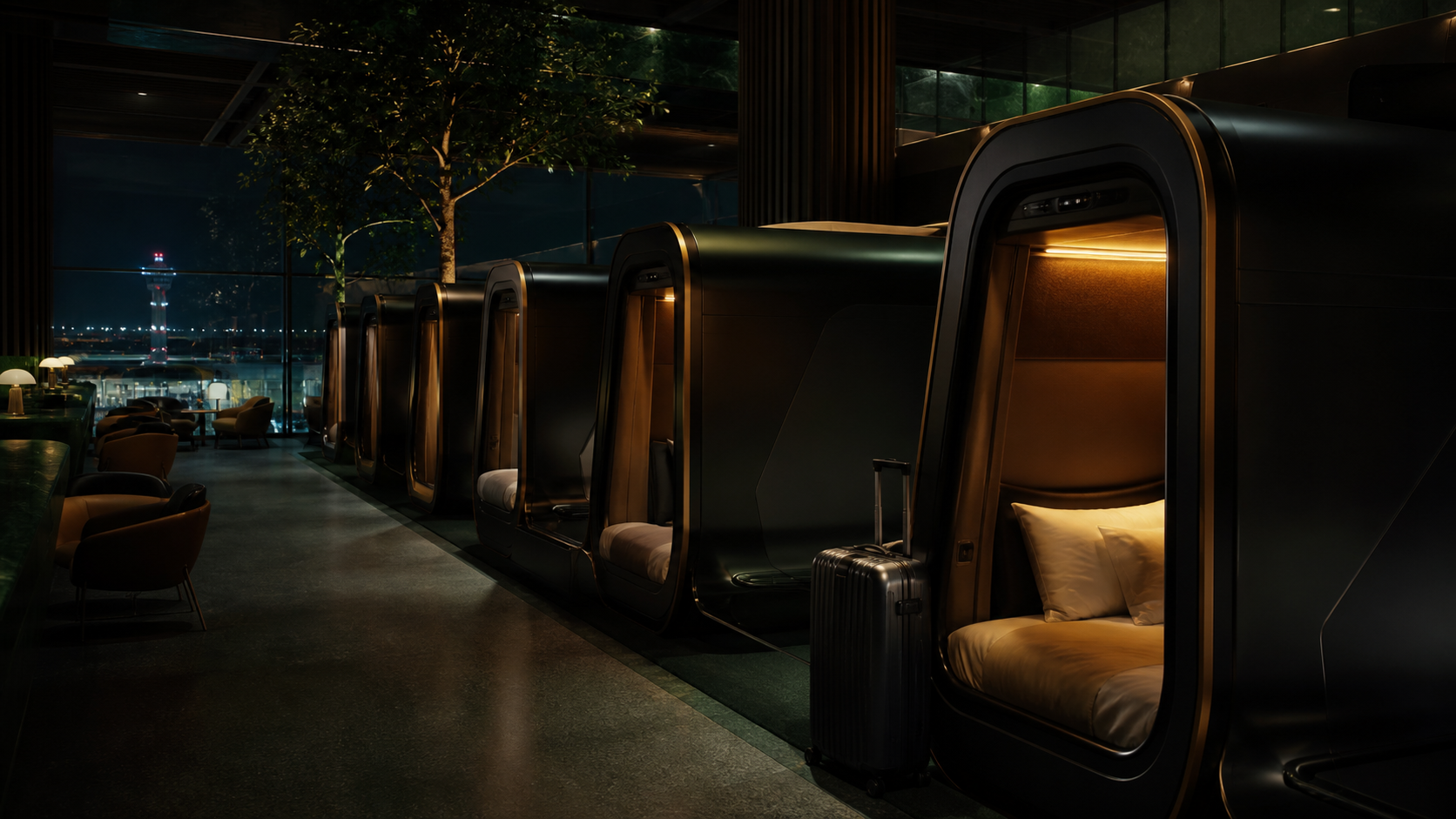
Rest between flights, without guesswork
Options, costs and how to find them
Airport sleeping pods range from privacy-shielded recliners to lockable cabins and compact transit hotel rooms. The right choice depends less on the name and more on where it is, when you can access it and what your ticket lets you do.
Find your best option01 / KNOW WHAT YOU ARE BOOKING
Operators use different names for very different levels of privacy, comfort and access. Compare the actual setup—not the label.
A lie-flat or deeply reclining chair with a hood or privacy wings. Best for a short nap; usually no lockable door.
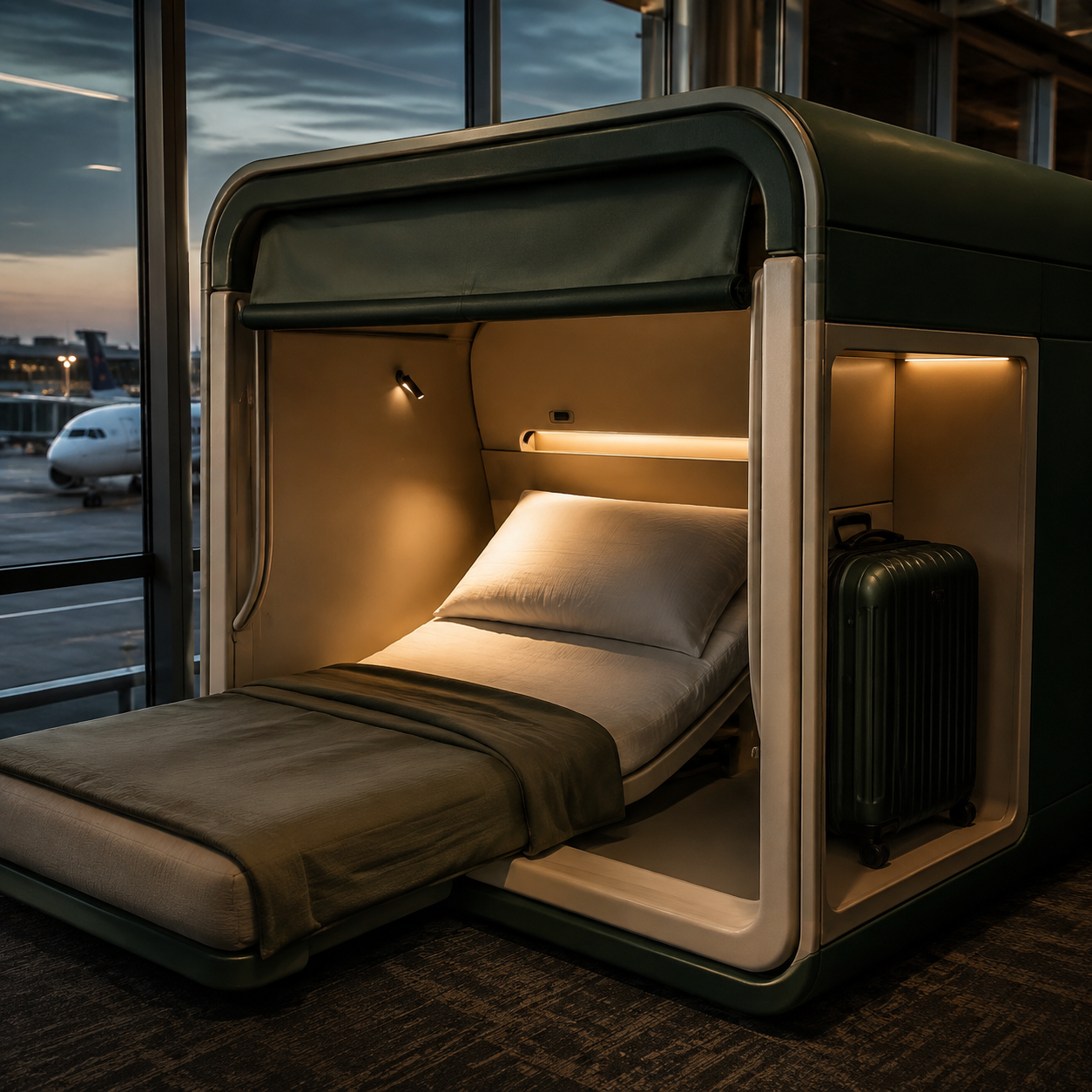
A compact horizontal cocoon with a mattress, light and charging. More privacy, but toilets and showers are often shared.
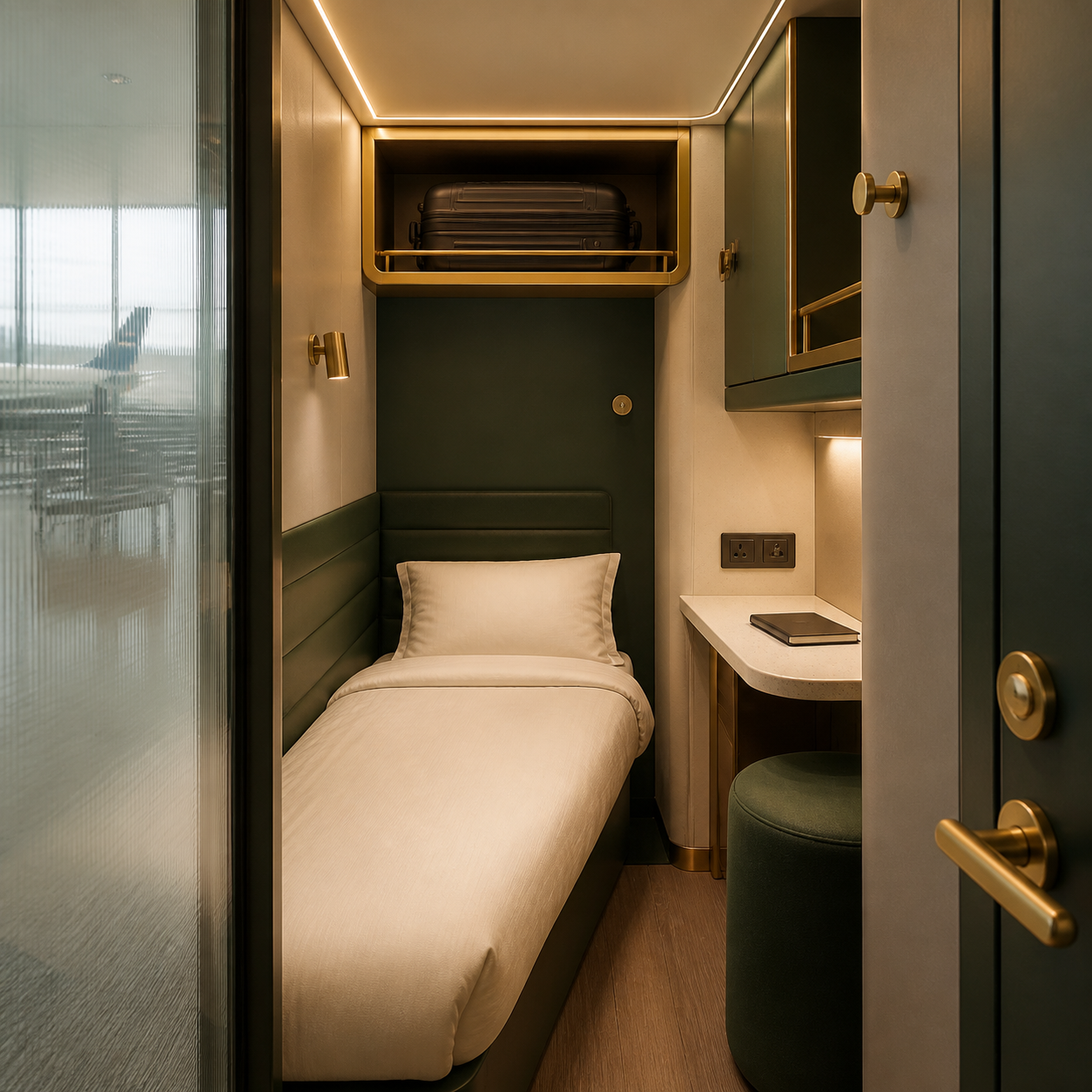
A small room with a bed, desk and luggage space. A stronger option for several hours or an overnight connection.
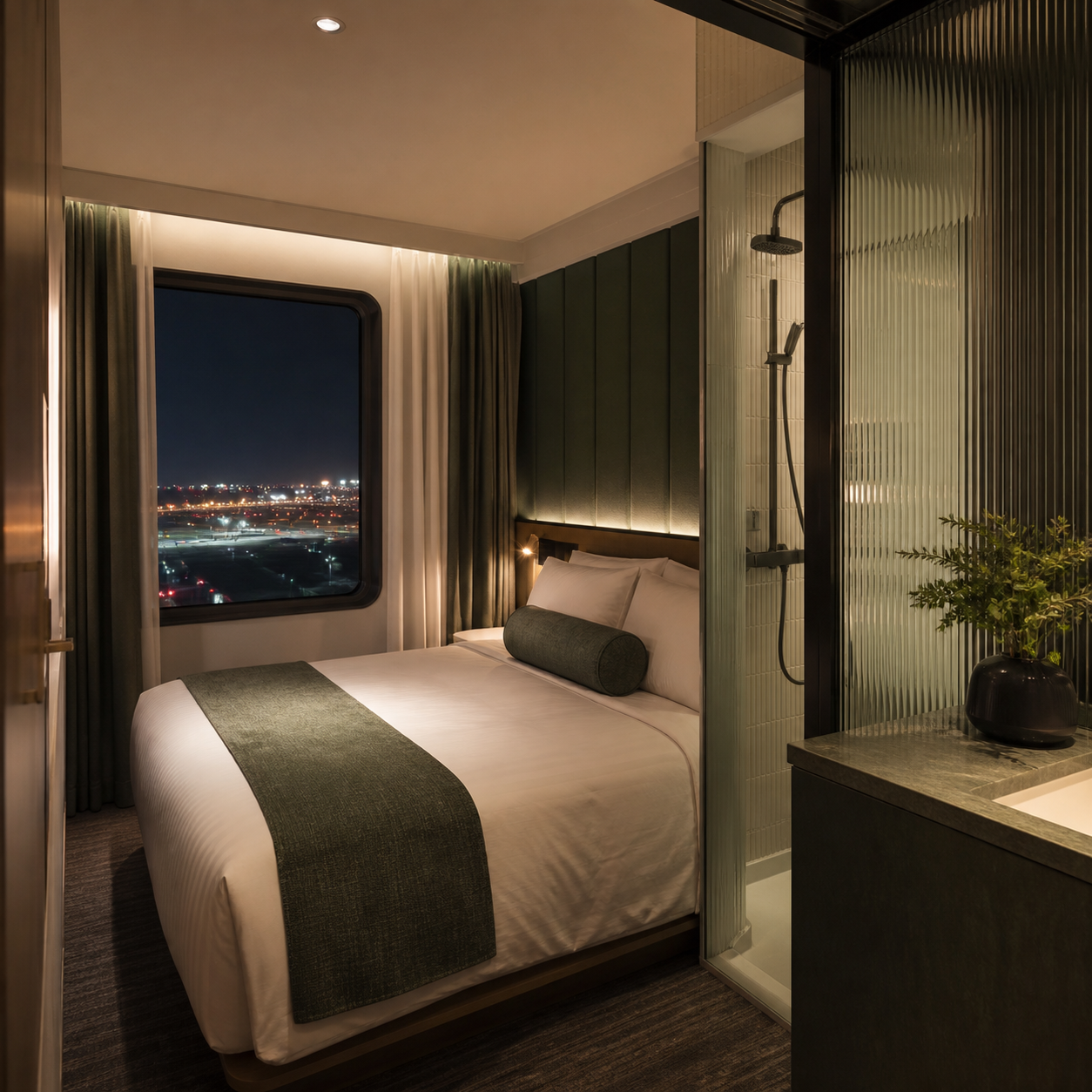
A compact hotel room inside or beside the terminal, often with a private bathroom. Best comfort; usually the highest price.
02 / DECIDE WITH REAL USABLE TIME
Subtract everything around the nap from the advertised layover: deplaning, walking, check-in, washing up, controls and the walk back to the gate.
Usually not worth it. Find a quiet area close to your gate.
Can work when it is in your zone and check-in is quick.
Often delivers meaningful rest if you protect a generous gate buffer.
Prioritize a shower, privacy and 24-hour access; confirm the border and terminal.
Usable rest time = total layover − arrival journey − access/check-in − return-to-gate buffer.
02 / THE DECISION THAT MATTERS
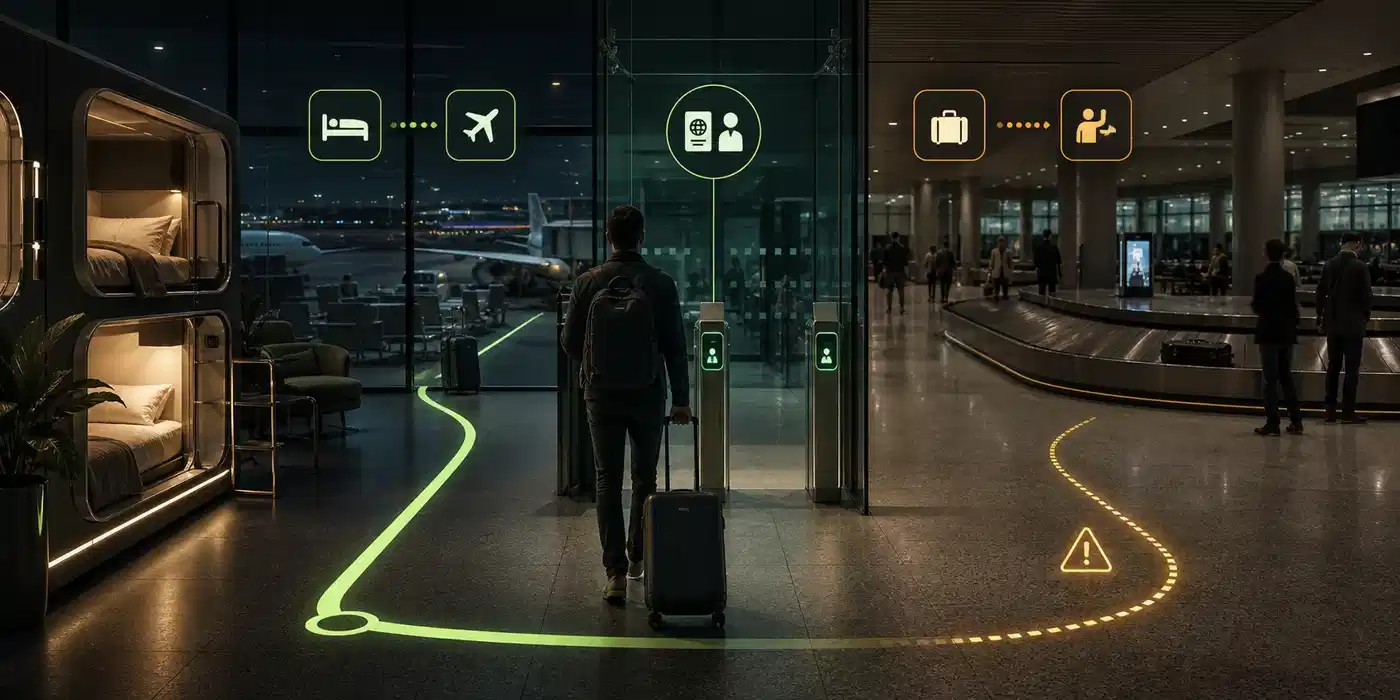
Answer three questions before paying. A pod can be in your airport and still be inaccessible from your route.
03 / VERIFIED STARTING POINTS
This is a curated starting list, not a promise of availability. Operators, terminals and access rules change—open the official page before booking.
Location and access details reviewed 3 September 2026. Always recheck before booking.
Planning ranges, not live quotes. Compare the total stay—not only the hourly headline. A minimum two- or four-hour block can change the real cost.
Exact terminal, concourse and gate area confirmed
Airside/landside access matches your route
Visa or entry permission checked if going landside
Checked-baggage plan confirmed with the airline
Minimum booking and total price understood
Shower and toilet arrangement checked
Always follow airport and pod-provider rules.
07 / REST BETTER
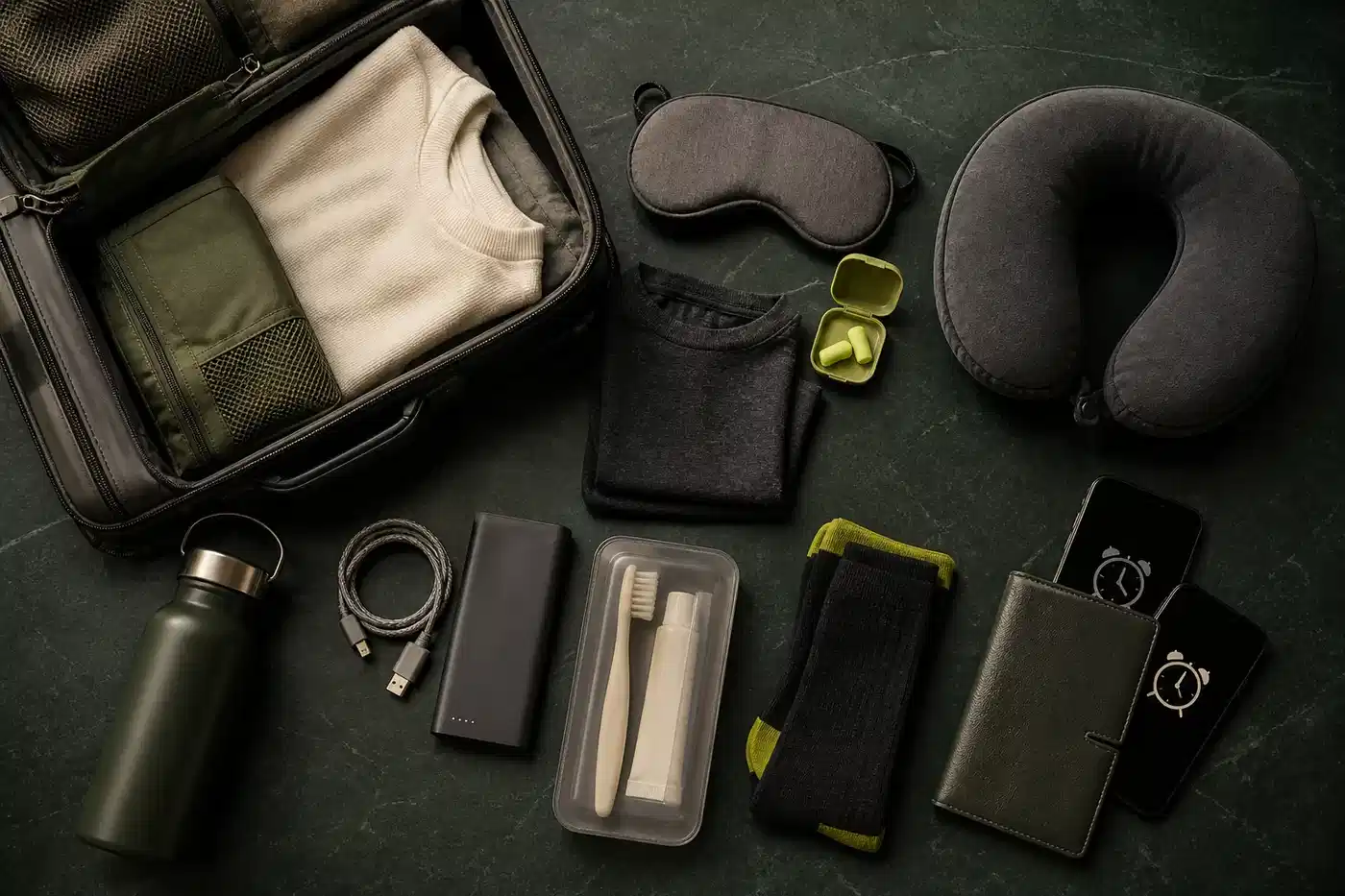
Even a good cabin improves with a few well-chosen items. Keep essentials in your carry-on: checked baggage may be out of reach.
08 / GET BACK WITHOUT RUSHING
As a conservative planning guide, many connections require waking 75–120 minutes before departure. This is not a universal rule: your airline’s boarding cutoff and actual route control the answer.
Set two alarms, recheck the gate when you wake, and arrive before boarding closes.
Sometimes, if it is landside. Airside facilities normally require a valid boarding pass and access to the relevant secure zone.
Lockable cabins offer more security than open recliners, but always keep passports, phones and valuables with you and follow the operator’s rules.
Some locations include private showers, some offer shared showers for an extra fee, and others have none. Check the specific room type.
Only when the booked product explicitly allows it. Many capsules and recliners are designed for one person; double and family cabins exist at selected locations.
Contact the operator immediately. Late-arrival, amendment and refund policies vary, and unused time may not be refundable.
Usually only if the booking, walking and wake-up time still leave a generous gate buffer. For a very short connection, a quiet lounge may be more practical.
FlightBreak helps you map the airport, connection steps and time you truly have. Build the route first; book the bed second.
Check my layover