You arrive
Your first flight lands and you enter the connection airport.

Connection fundamentals
A flight connection is the transfer from one flight to another at an intermediate airport.
Connecting flights work safely when the ticket, terminal, baggage, border steps and real walking time all fit the itinerary.
See how connections workOne journey, two flights
Every connection follows the same broad route. The airport and itinerary decide how many checks appear between the two aircraft.
Your first flight lands and you enter the connection airport.
Follow connections signs toward the next terminal or gate.
Complete security, immigration or customs when required.
Through-checked bags move behind the scenes to the next flight.
Reach the gate before boarding closes for the onward flight.
The detail that changes the risk
Two itineraries can look identical on a search result while leaving you with very different responsibilities.
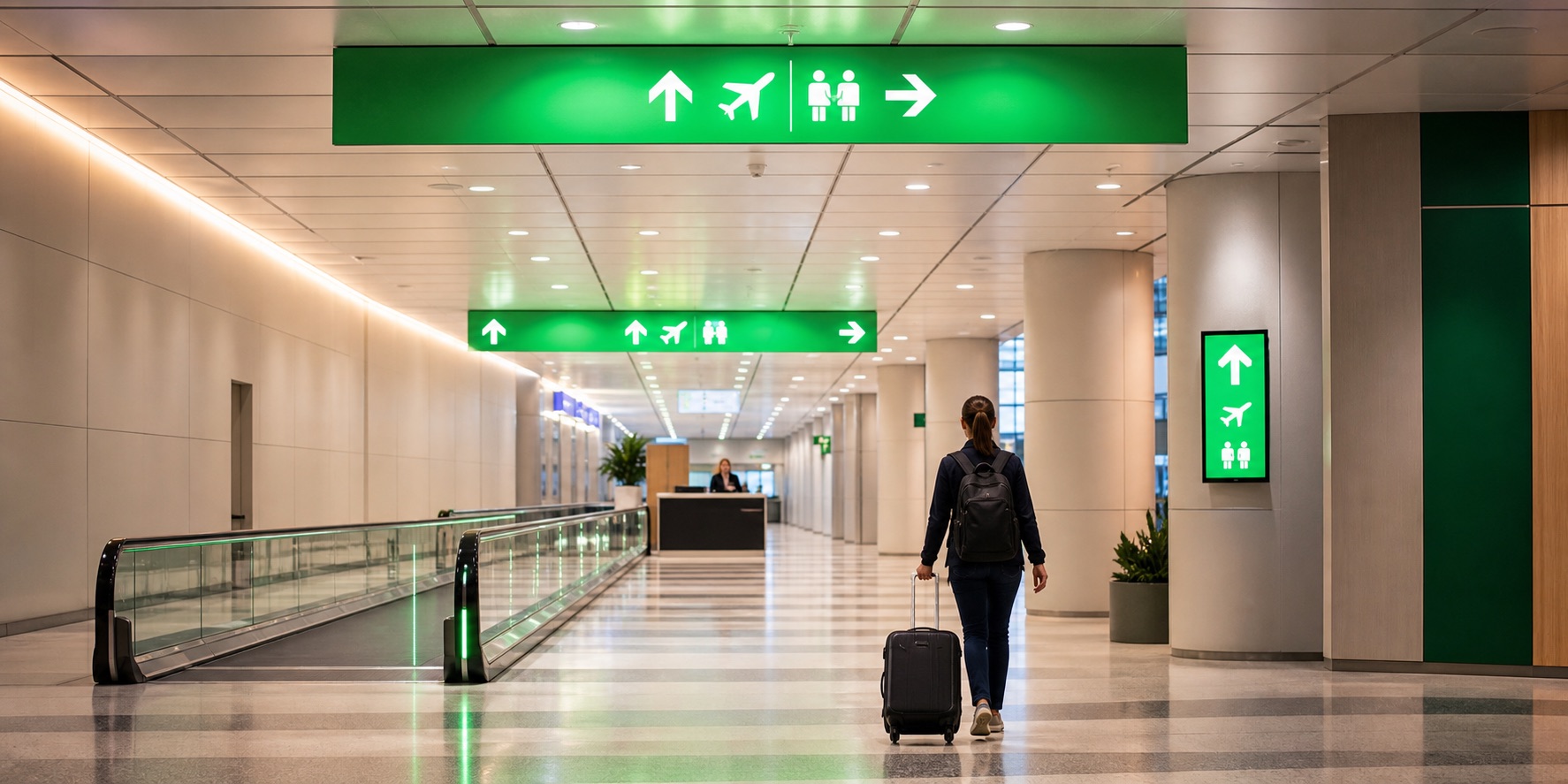
Both flights sit on one ticket or protected itinerary.

The flights are on separate tickets and you connect independently.
Treat every separate-ticket journey as a self-transfer until the airlines confirm otherwise. A shared booking screen or familiar airline name does not by itself guarantee protection. Check the risk with your itinerary →
When the plan changes
Move quickly, but do not guess. The right response depends first on whether the connection is protected.
Look for a new gate, updated departure time or automatic rebooking.
Do not head to baggage reclaim or leave airside unless instructed.
If boarding is still open, the gate team has the most current operational view.
If the gate has closed, ask for rebooking and confirm where your bags will go.
Already missed the onward flight? Follow the dedicated missed-connection recovery guide for rebooking, baggage, care and receipts.
Between the two aircraft
These four details determine whether the transfer is a direct walk or a much longer airport process.
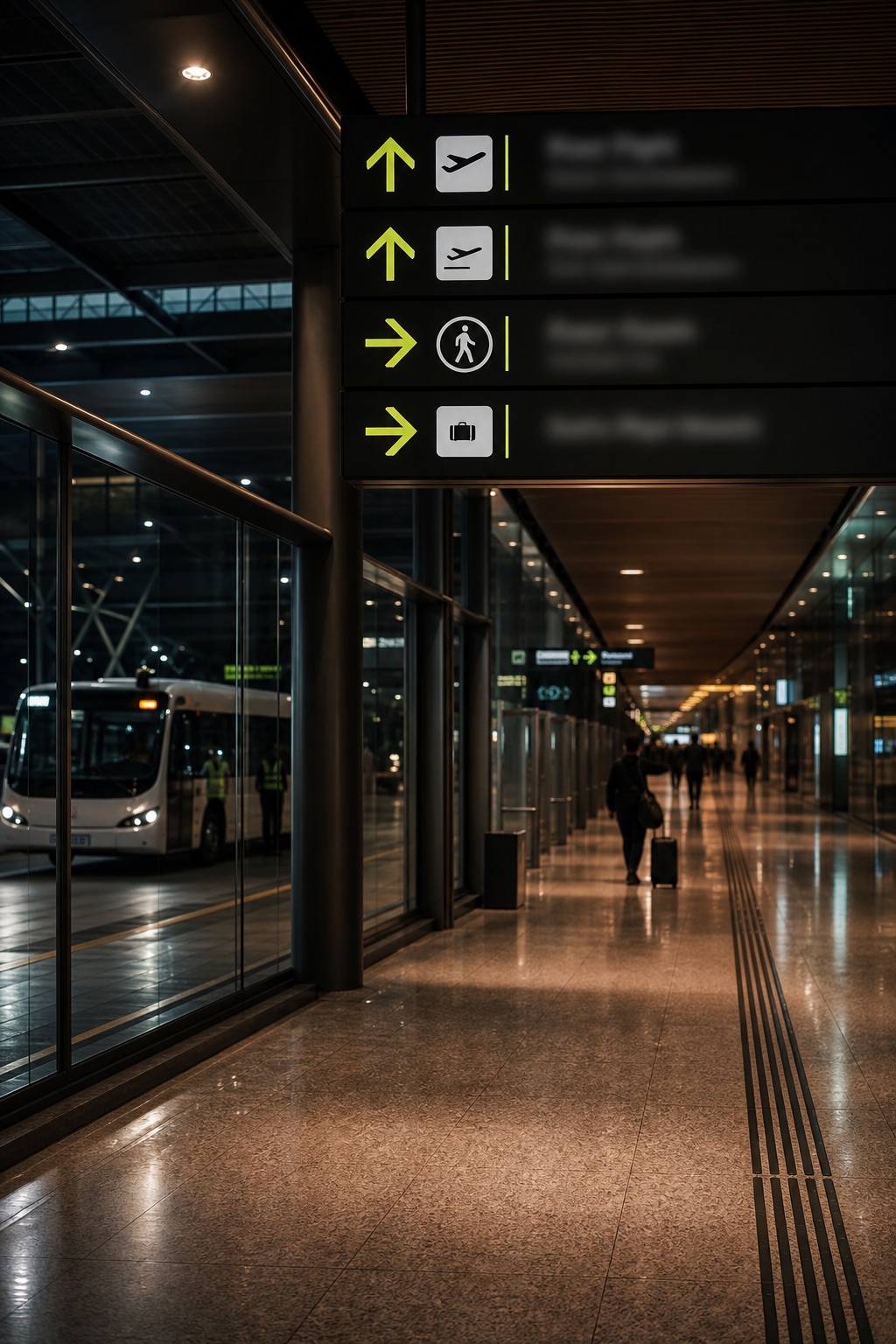 01
01Your next flight may leave from another concourse, satellite building or terminal.
Check the terminal before travel.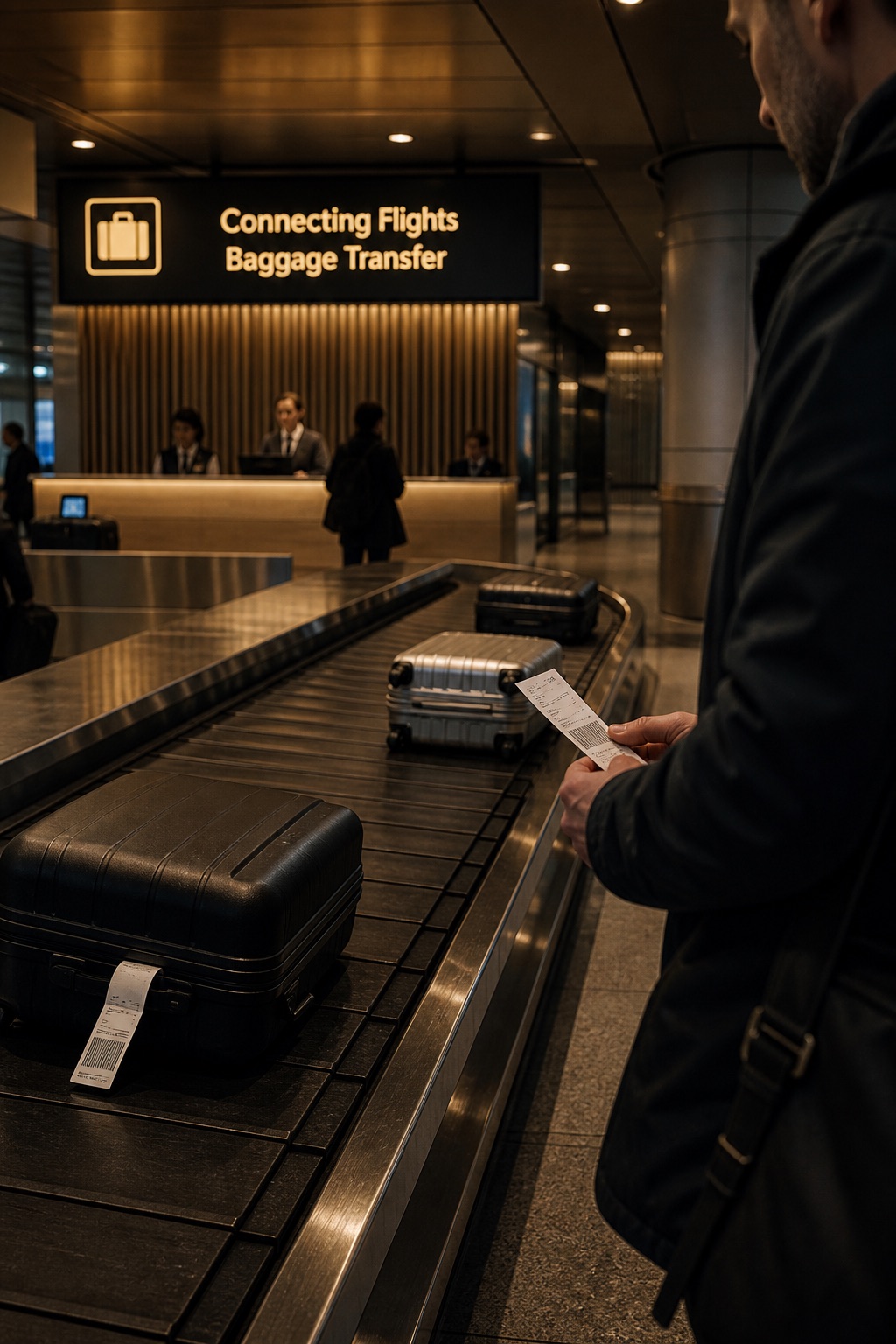 02
02Bags may be transferred automatically or need collection and a new bag drop.
Read the final airport on your tag.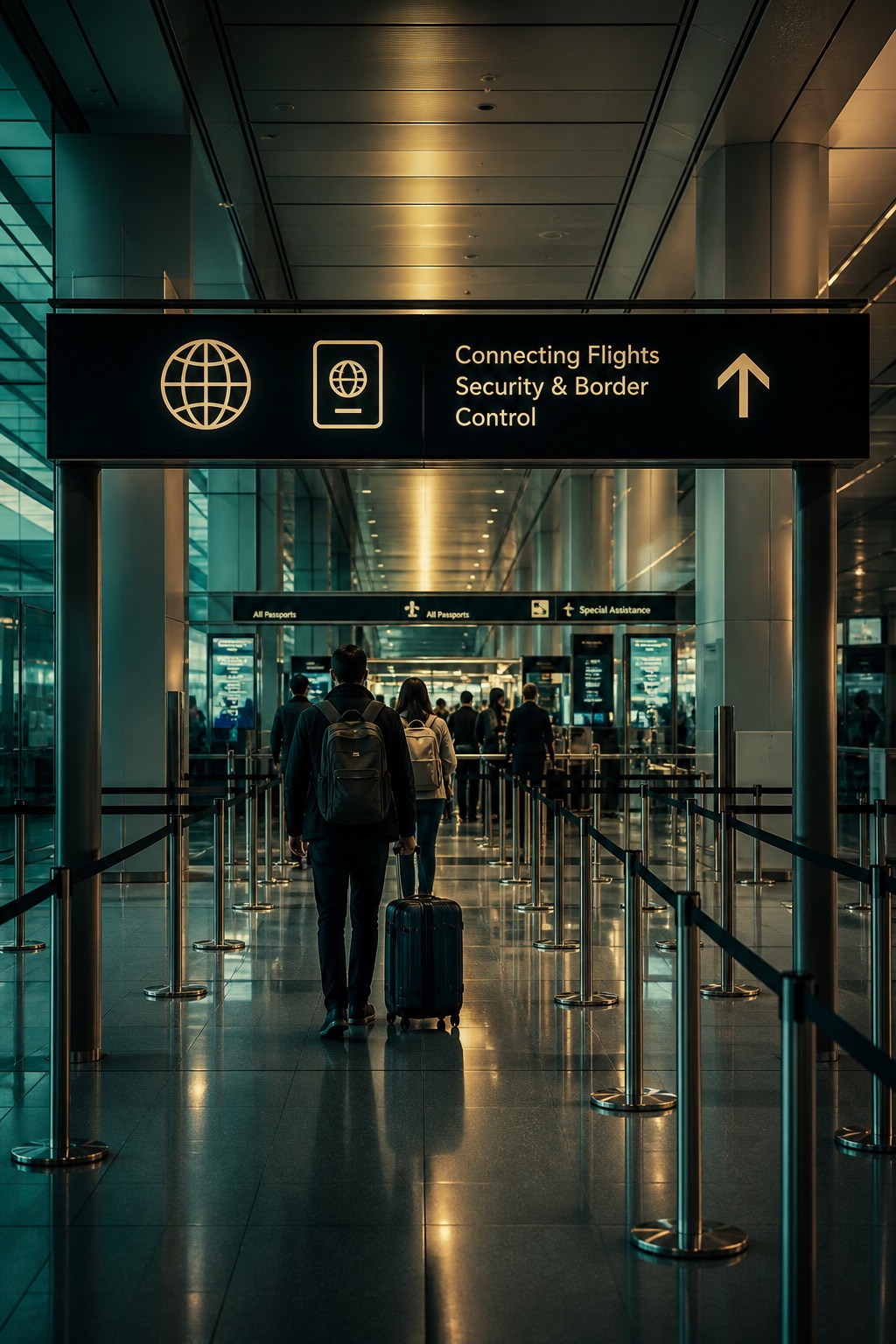 03
03A connection can include security screening, immigration, customs or all three.
Allow extra time for formalities.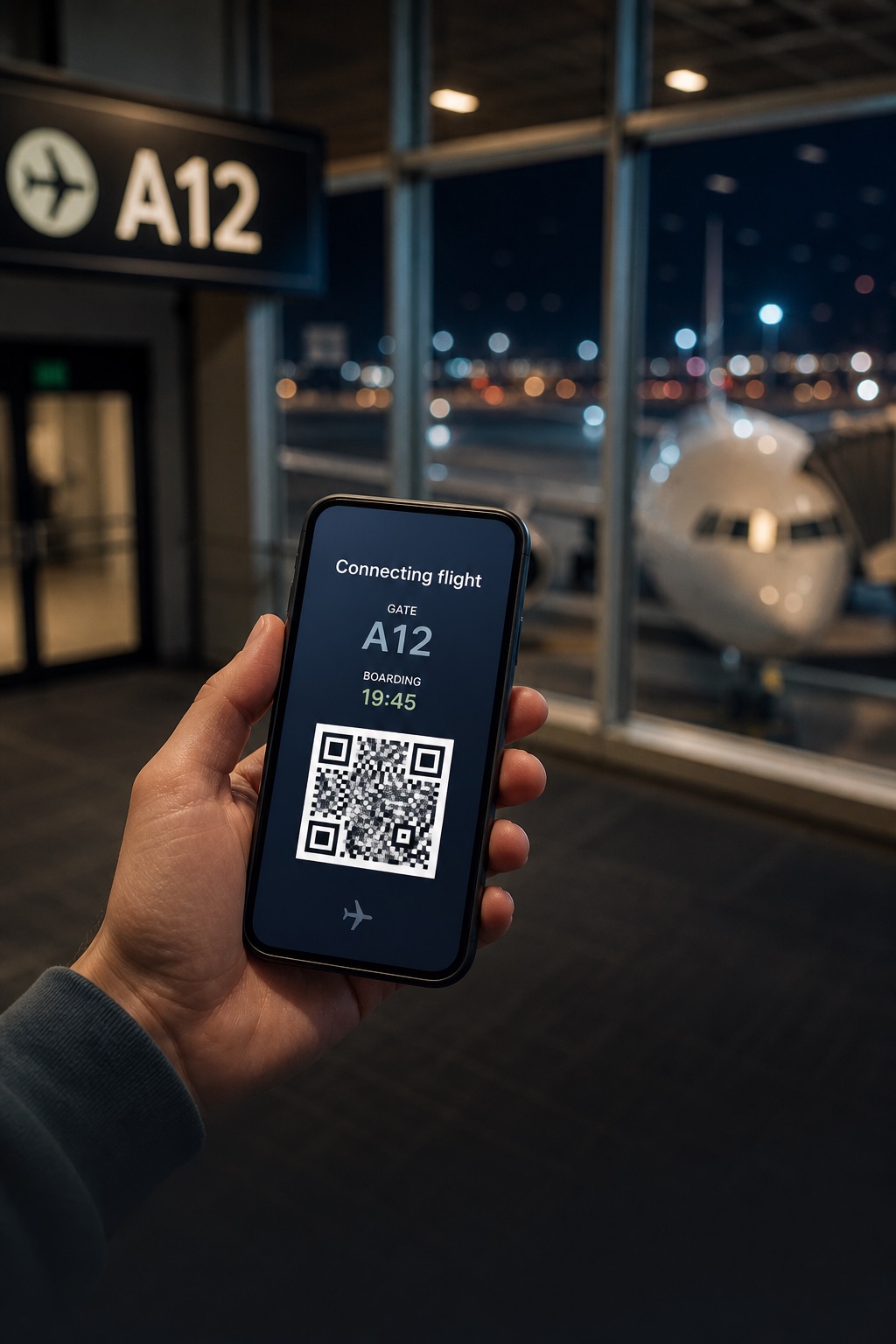 04
04You may already have it, receive it in the airline app or need a transfer desk.
Know where your next pass comes from.Plan by connection type
These are conservative planning baselines, not official minimums or guarantees. The airline's valid itinerary and your real airport path come first.
A planning baseline when bags continue and there is no border or terminal change.
Useful starting room for security, immigration, a shuttle or a long airport walk.
Often needs much more when baggage, entry, check-in deadlines or another terminal are involved.
See the route before you fly
The label “connecting flight” can hide very different airport journeys.
Usually the simplest transfer: stay airside, find the next gate and confirm your bags continue.
Typical extra stepTerminal or concourse walkYou may remain in transit, but some airports still require transfer security or an airport transit visa.
Typical extra stepSecurity and document checkOften includes immigration and customs at the first point of entry, sometimes with baggage reclaim.
Typical extra stepBorder, customs and bag re-dropYou may need to enter the country, collect bags, change terminals and check in from the beginning.
Typical extra stepThe full arrivals-to-departures routeBefore you book or board
Seven confirmations turn a vague transfer into a journey you can plan.
Use your real itineraryCheck the airport, times and connection risk
Open the plannerQuick answers
The questions that most often change a transfer plan.
A flight connection is the transfer from one flight to another at an intermediate airport before reaching your final destination.
Minimum connection time is the airport-and-route-specific minimum used to build a valid itinerary. It is not a guarantee that every traveler will find the connection comfortable.
Usually not when bags are tagged through on one protected itinerary. Some countries, airports and separate-ticket transfers require collection and re-checking, so confirm the baggage tag and airline instructions.
Possibly. The answer depends on the countries, terminals and airport transfer flow. You may face transfer security, immigration, customs or a combination of them.
When both flights are on one protected itinerary, the airline will generally help rebook you after a disruption, subject to the ticket conditions and applicable passenger-rights rules.
It still connects two flights, but the tickets are separate and you normally carry the risk. You may need to enter the country, collect bags, check in again and pay for a replacement if the first flight is late.
Method and sources
FlightBreak provides general planning guidance. Airline conditions, airport transfer routes, visas and passenger rights vary by journey and can change.